
Launching a Shopify store is easy. Building one that looks premium and converts is a different job. That’s where an e-commerce developer earns their fee.
Plenty of merchants try the do-it-yourself route first. Many end up with a store that works but doesn’t impress. Shoppers notice, and they don’t always come back.
This guide explains why hiring an e-commerce developer is worth it. You’ll see what they do beyond drag-and-drop, and what you’re really paying for. You’ll also learn how to choose the right one.
Why hire a person when AI is free?
AI tools are everywhere now. Many of them cost nothing. You can ask one to explain Shopify, write copy, or suggest a layout in seconds.
But free tools only answer the questions you know to ask. They don’t know your brand. They don’t know your customers. And they can’t tell you what’s missing from your store.
A developer brings the context AI lacks. That’s the real reason to hire one.
Related post: Using AI to Drive Up Sales in Shopify
Setting up a Shopify store is easy
Anyone can launch a store in an afternoon. Pick a theme, add products, connect payments. Done.
The platform is built for that. Shopify wants you live fast.
The result, though, often looks like every other store. Default theme. Stock layout. Nothing that says “trust us with your credit card.”
What a seasoned developer does beyond setup
Setup is where an experienced developer starts, not where they finish. The real work is making your store easy to shop. They organise your products so customers find what they want quickly. They also keep pages loading fast, especially on phones.
The buying experience gets the same attention. Product pages, the cart, and checkout are designed around how people actually shop. They also choose the right tools for email and reviews, and skip the ones that slow your store down.
Then comes the behind-the-scenes work. They make sure your store shows up in Google and works on every device. They track your numbers too, so you can see what’s working. After launch, they keep spotting what to improve as your business grows.
None of this shows up in a theme demo. But shoppers feel it, and so do your sales.
Making it look premium is the hard part
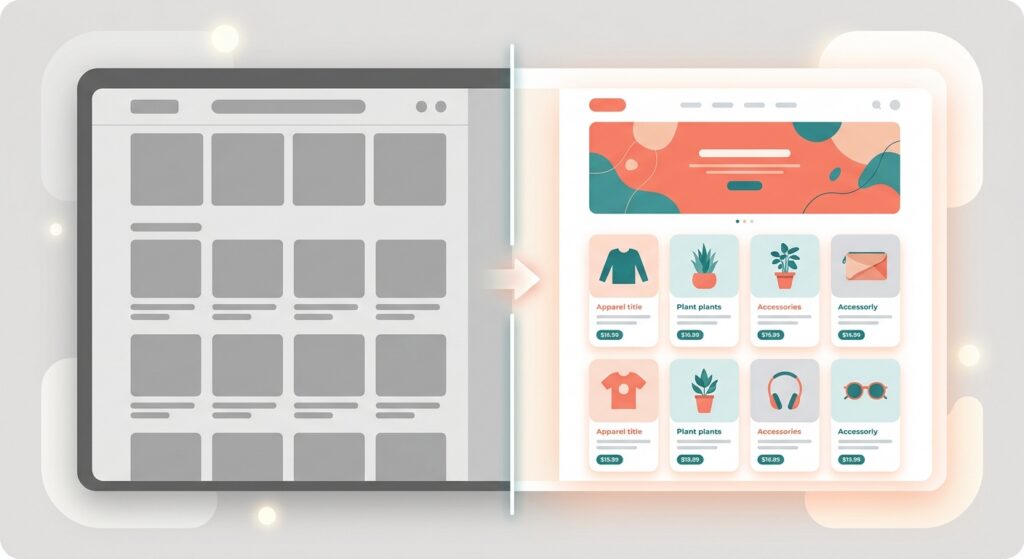
Premium design is about details. Spacing, typography, image quality, and consistency all matter. Shoppers can’t always explain why a store feels cheap. They just leave.
Good design builds trust before a shopper reads a single word. It signals that your products are worth the price. That’s especially true if you sell higher-priced items.
Storefront customisation is more than drag-and-drop
The theme editor is friendly. You can move sections, change colours, and swap images. But it only goes so far.
Real customisation means working beyond the sections the theme gives you. Think custom product page layouts, smarter navigation, or a checkout that matches your brand. It also means keeping the store fast while you do it.
A drag-and-drop edit can look fine on desktop. On mobile, it might break. Someone has to test that. And someone has to know why it breaks.
What you’re actually paying for
Not hours of typing. AI handles a lot of that now. You’re paying for expertise and knowledge.
That means a few things:
- Pattern recognition from building many stores
- Knowing which apps are worth installing, and which will slow you down
- Spotting conversion leaks before they cost you sales
- Making design decisions that suit your brand and customers
An experienced developer has seen what works. They’ve also seen what fails. That experience saves you from expensive trial and error.
Related post: The Top 5 Things You Need to Know to Be a Shopify Expert
Hire the right e-commerce developer
Look for someone who asks questions first. Good developers want to understand your business before they touch your theme. Ask to see past stores. Check that they care about speed and mobile, not just looks.
Be wary of anyone who quotes a price before asking what you sell. That’s a template job, not a tailored one.
Also ask how they use AI. The best developers use it to move faster. They don’t use it as a substitute for thinking.
Final thoughts: DIY-ing with AI versus hiring an experienced e-commerce developer
Doing it yourself with AI is a fair option. It’s fast, it’s cheap, and it works well for a simple store. You can get live this week and learn a lot along the way.
Hiring an experienced developer is a different bet. You pay more upfront. In return, you get a store that looks premium, loads fast, and is built to convert. You also skip the trial and error.
So the choice comes down to your goals. If you’re testing an idea, start with AI. If you’re building a brand customers should trust, hire an experienced developer.
Planning your 2027 store and want a second opinion? iconjen.com